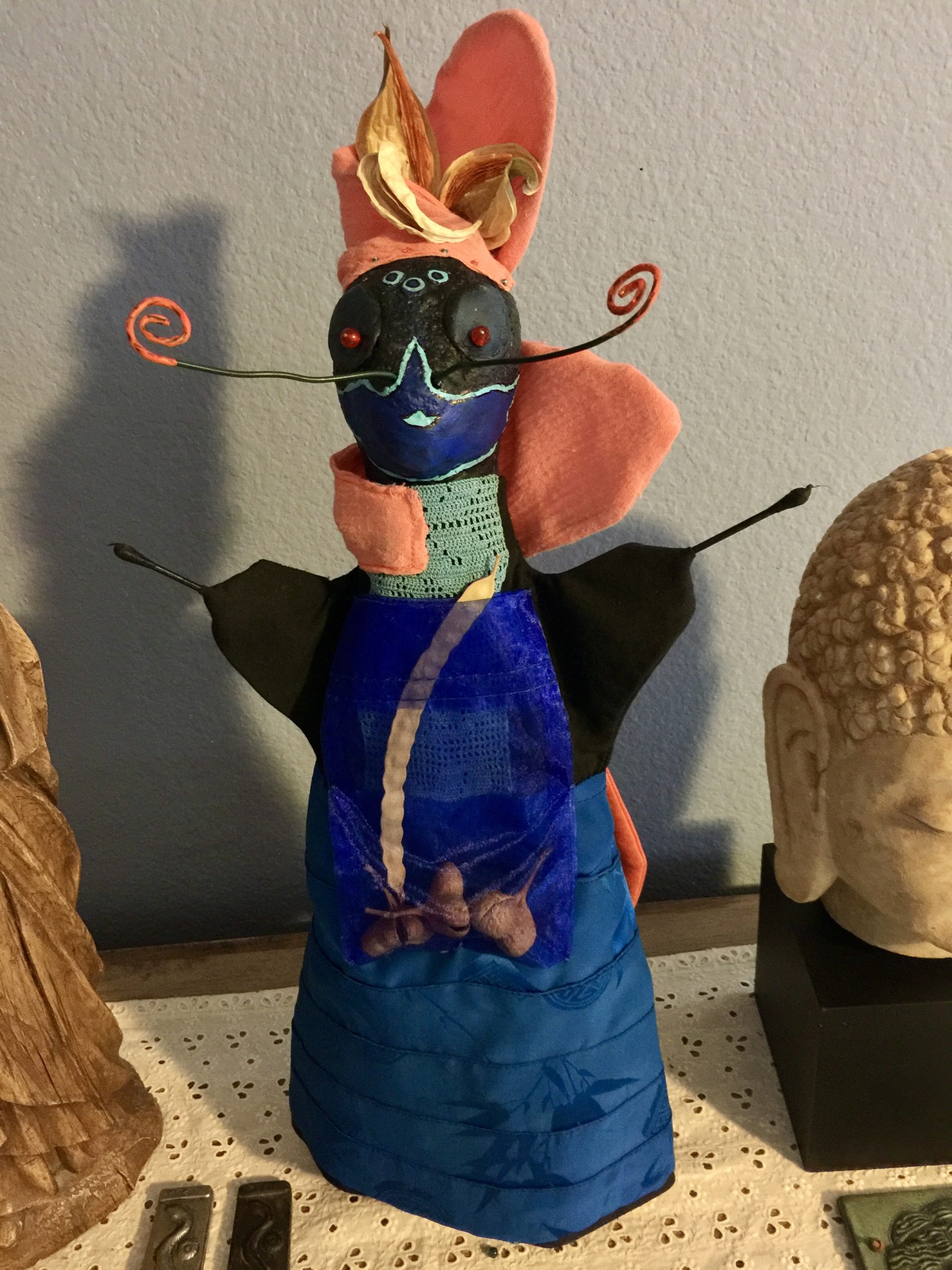
I’ve enjoyed encountering various wasps this summer, too. The (obsidian black and sapphire blue with orange wings) tarantula hawk wasp is a large and beautiful being, while also a bit terrifying. To tarantulas, that is. While the male wasps lack a stinger and hang out on flowers and get tipsy on fermented fruit, the females lure and attack tarantulas that they paralyze with their sting, drag into their nest, and lay an egg on. Once the larva hatches, it devours the tarantula from inside out. Yes, rather gruesome (I do feel sorry for the tarantula). Tarantula hawk wasps also pollinate some of my favorite native plants: zizotes milkweed (a host for monarch butterfly caterpillars) and Mesquite and Mexican Buckeye trees. My new puppet is inspired by the tarantula hawk wasp (scientific name is Pepsini) — her headress holds zizotes milkweed pods and her potions bag holds mesquite and buckeye seedpods — a reminder that this fierce (to tarantulas) insect also nurtures plants that host and feed many other creatures. Oh, and although the tarantula hawk wasp generally ignores any nearby humans, you wouldn’t want to try to catch or otherwise threaten one, given that its sting is reputed to be the second most painful insect sting on the planet.